



To Remember, You Have to Forget

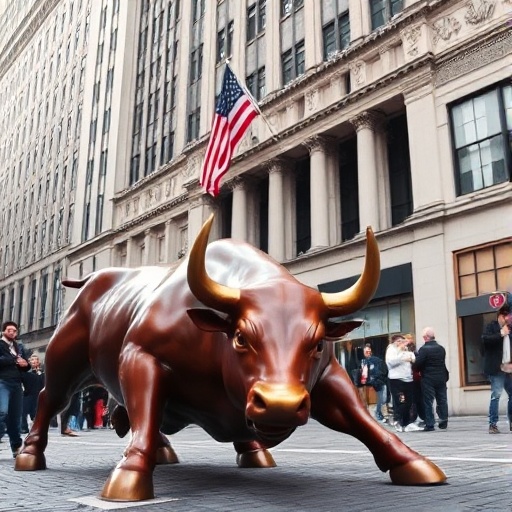


Why do investors tend to forget more about bull markets than about bear markets? After all, bear markets are shorter in duration and in size (on average) than bull markets, so one could assume that, as a consequence, bull markets should be easier to remember. Why have so many digital town-criers spent the last five years warning us about the doom and gloom that is about to befall all those that are still in the market? How many times have you read about over-valuation in the equity markets, while the market continued to make new highs?
Scientists that study memory are now paying more attention to the role that “forgetting” plays in remembering things. It turns out that we would be unable to remember very much at all if we weren’t so good at forgetting. If our brains were to remember everything that happens and every thought we have throughout our daily lives, the resulting soup of superfluous memories would be indecipherable. In other words, we would have no memory.
We remember best those experiences that our brain/mind deems important, and forget all the rest. At the end of a day, we remember almost everything that happened, while the next morning we have forgotten most of it.
Scientists don’t know much about how our brains decide what is important enough to remember, but our working hypothesis is that the emotion of FEAR has a huge role to play; remembering danger is an adaptive evolutionary trait which assists in survival. Some situations, however, are remembered too well for our own good. PTSD, for example, results from extreme fear experiences that cannot be forgotten, and which end up interfering with normal memory function; an inability to forget, means we have trouble making new memories. You must forget, in order to remember.
Fearful events, and the resulting formation of strong memories of them, explains why investors and analysts are fixated on bear markets, even (and especially) during a secular bull market. It is a mild form of PTSD.
Of course, by the time investors are convinced that it is safe to go “back in the water”, it is too late. Fear is absent at the top of the market, which is why bull markets don’t make as big of an impression.
Market Sentiment
Most investors rely on fundamental analysis when making investment decisions, but in our experience, the market is not driven by the fundamentals, and responds inconsistently to financial and geopolitical news.
Our working-hypothesis is that the only constant in the market is human emotion, specifically, fear and greed (fear of missing-out), and that these emotions leave repetitive patterns in the pricing history of the market which inform us about probable futures. Of the several techniques we use to measure investor fear, the most direct is the AAII (American Association of Independent Investors) weekly survey where members are asked whether they think the market will be higher, unchanged, or lower six-months in the future. This indicator has a fairly good track record as a contrarian indicator; market tops are characterized by high bullish sentiment and low bearish sentiment, while market bottoms are characterized by the opposite.
The chart below shows the bull-minus-bear sentiment differential in juxtaposition to the S&P 500. It highlights the fact that nearly 60% of the local tops occurred when the differential was higher than +40%, while only 16% of tops occurred when the differential was less than +15%. This past week, the differential fell for the third week in a row to just +4%. Even after a 13% rise in the S&P 500 since the February low, fear is still rampant among retail investors. Market tops occur infrequently when there is this level of fear.

Valuations
Fundamental analysts have been warning us about over-extended stock valuations almost since the beginning of this bull market a decade ago, yet the market itself has continued to rally higher. Most of the time, the price-to-earnings ratio, or some variant such as the price-to-sales ratio is trotted out to backup the claim of over-valuation, but this type of analysis does not take interest rates into account. We prefer to use Net Yield, which we calculate as the dividend yield minus the 6-month Treasury yield; this compares the return-on-capital invested in the stock market, with that of a risk-free Treasury.
The chart below shows that, although the Net Yield has recently turned negative, it still is higher than at any time during the tech bull market, and higher than the last three years of the housing bull market. Also, notice that the Net Yield tends to flatten ahead of a major market top.

By this measure, stocks are not over-valued, and until the Net Yield starts to flatten and fear becomes scarce, we will assume that the ‘most hated bull market in history’ is still in-play.
ANG Traders
Join us at www.angtraders.com and profit from our 40-years experience.
Source: Nicholas Gomez


