



Free App Analytics Tools: Your Guide to App Market Intelligence

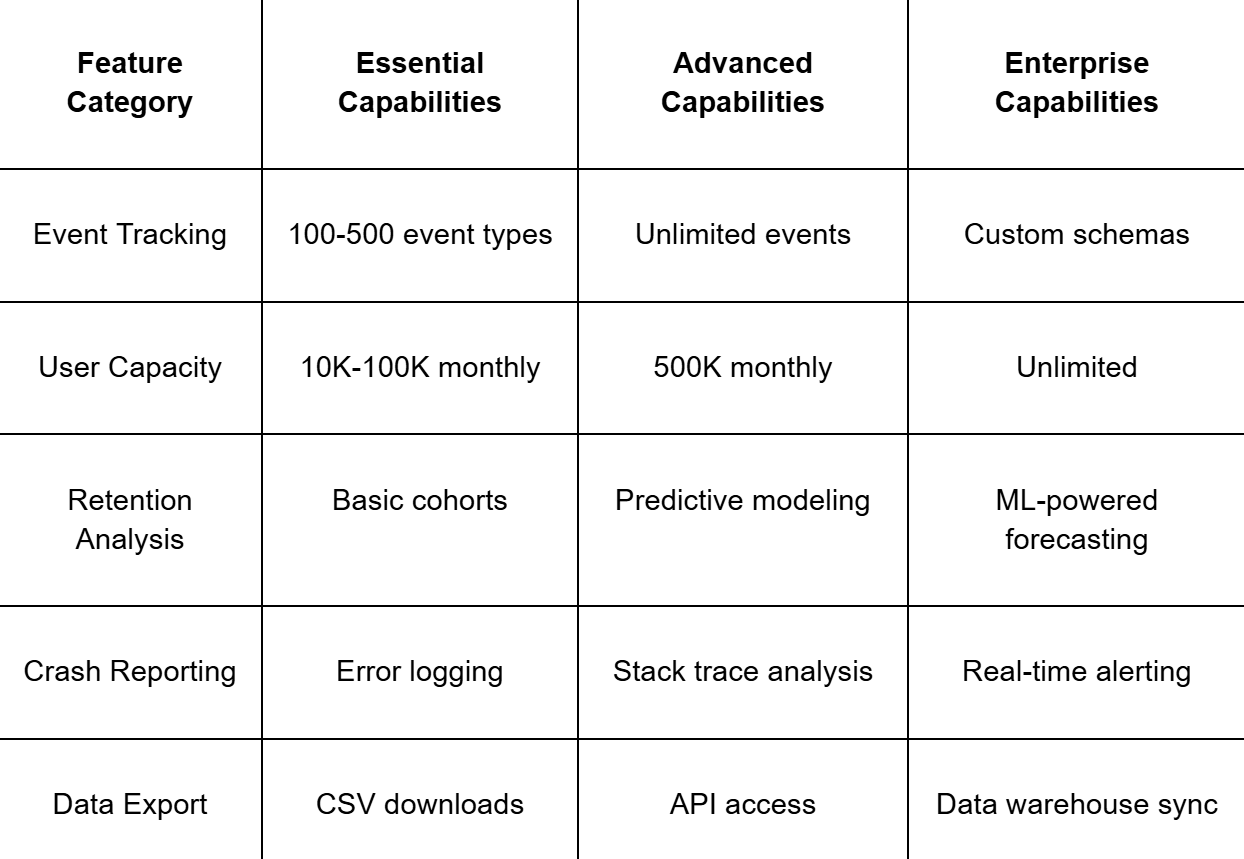

Developers can monitor performance metrics for mobile assets, learn user engagement patterns, and make hopeful, well-informed decisions to promote sustainable development by finding the required free app analytics tool. Competitive benchmarking analytics on app market intelligence platforms provide development teams with information to determine download trends, revenue potential, and strategic placement across aggressive app store platforms in both the iOS and Android marketplaces.
It is a complete guide to the most popular analytics features, a comparison of the critical features required to track user behavior, and an illustration of competitive intelligence accelerating the success of mobile apps in the competitive marketplace of 2026.
Why Mobile App Analytics Matter in 2026
According to Mordor Intelligence, the mobile app analytics market will experience growth of 19.60% by 2025 (8.22 billion) and then by 2030 (20.13 billion) at a CAGR of 19.60%. The cloud-based implementation now occupies 57.2% of the market share, and marketing analytics constitute 41.2% of overall platform use, whether between enterprise or start-up implementations in the global market.
It has been shown that development teams that have sound analytics solutions have quantifiable benefits in retention optimality, funneling conversion, crash reporting diagnostics, and calculation of customer lifetime value that directs product roadmap priorities.
Key 2026 Market Statistics:
- The user behavior analytics division is expanding at a 21.8% CAGR into 2030.
- SMEs that have embraced analytics at a rate of 23.2 annually.
- Medical apps are spreading, and the healthcare vertical is projected to have a growth of 21.2% CAGR.
- The Asia-Pacific region is marked by 21.4% CAGR due to the penetration of more than 85% smartphones.
Best Free Application Analytics in 2026
To choose the most reasonable free app analytics tool, one will have to consider compatibility in terms of the platform, the possibility of event tracking, the ability to report in real-time, and the possibility of integration into current development processes and constant deployment pipelines.
User Segmentation and Event Tracking
Top analytics systems enable tracking of an infinite number of event types, data warehouse export functionality, and, by default, integration with advertising audience targeting functions. User segmentation analysis, real-time session monitoring, and A/B testing frameworks provide the product teams with the opportunity to accelerate the iteration process without the need to pay extra subscription fees for the basic functionality.
Retention and Funnel Analysis
Good analytics ensure that download attribution, retention cohort, revenue metrics, and app store optimization results are available in a single dashboard view. Campaign performance measurement and conversion funnel can assist the team to determine the friction points during the user journeys, from acquisition to monetization milestones.
Analytics Predictive Capabilities
Modern platforms provide machine learning-driven predictive analytics (i.e., that predict churn) that automatically identify user groups that are high-value and prescriptive user growth strategies. These capabilities convert raw behavioral data into usable intelligence that paves the way to improving engagement and increasing revenues throughout the user lifecycle phases.
Free App Analytics Tool Comparison by Category

App Market Intelligence Platforms
In addition to internal analytics, app market intelligence discloses competitor download estimates, revenue forecasts, positioning on keywords, and trend analysis of each category in the world's app store marketplaces with billions of active users.
The download velocity, revenue attribution, share of voice metrics, and advertising creative performance data are monitored in dozens of countries around the world, as reported by TechCrunch about the industry consolidation trends. Such competitive insights will make the development teams benchmark against the leaders in the category and determine new opportunities before market saturation sets in.
Competition intelligence platforms such as Appark.io are offered with open-access market intelligence tools that are available to independent developers and growing teams seeking to gain insight into competitive positioning data, download trend analysis, and revenue benchmarking without requiring enterprise investment.
Key Mobile App Metrics
These performance indicators should be reflected in the analytics implementation to facilitate optimization decisions in product development as well as marketing capabilities:
- Day 1, Day 7, and Day 30 retention; user stickiness; and product-market fit indicators in demographic groups.
- The length of the session and the frequency of use suggest levels of importance and, for the habitual one, the development of feature exploration.
- Monitoring the stability of the rash-free user percentage on device fragmentation and on operating system versions
- Stability of a crash-free user percentage monitoring application in devices, not only in fragmentation scenarios but also in operating system versions.
- Conversion funnel monitoring the movement between install, onboarding, activation, and monetization events.
- Customer acquisition cost by channel, assessing service efficiency using paid advertising, organic search, and referrals.
Used features: Advanced implementations use cohort analysis, using predictive churn modeling and feature adoption tracking to guide prioritization decisions made during an agile development sprint.
Best Practices in Implementing Analytics
Analytics value cannot be maximized without strategic planning, other than that of merely integrating the SDK, but quantitative measurement and qualitative user research findings need to be combined and analyzed altogether in order to gain exhaustive knowledge of the requirements of the audience.
Guidelines on the strategic implementation:
- Identify the pre-launch success measures by setting the key performance indicator goals to match the business goals and the milestones required by investors.
- Mapping crucial user paths to particular events that can be traced with full funnel coverage: acquisition to retention and monetization.
- Recurring review cadences include monthly risk reviews with cross-functional product stakeholders and weekly reviews of the metrics. Review the metrics and monthly analysis. The review will be conducted with a strategic analysis with cross-functional product stakeholders.
- Integrate complementary data sets, matching product analytics tools to market intelligence solutions with internal performance mix and competitive perspective tap.
Those teams that lead to the best outcomes align behavioral analytics with the use of crash reports, collection of user feedback, and competitive benchmarking in integrative dashboards that allow making quick decisions.


